
Peoria Resident Lookup Sources
No agency keeps a complete roll of Peoria residents. Start with the source tied to the fact already known. An address points to the assessor, a deed party to the recorder, and a case clue to the court of record. Vital records answer family-event questions under their own access rules. The voter portal is designed for a voter checking their own registration, not for open name browsing.
| Record | What It Confirms | Where | Access |
|---|---|---|---|
| Parcel and tax roll | Owner, tax mailing destination, APN, legal address | Maricopa or Yavapai assessor | Free; not proof of occupancy |
| Recorded document | Name variants, property transaction, instrument mailing | County recorder | Index and some images; copies by request |
| Court record | Party role, case events, status, disposition | State index, eAccess, or clerk | Index free; some documents or copies cost |
| Voter record | Registration status, district, and participation history | Arizona self-portal or lawful county file | Identity and use limits apply |
| Historical vital image | Older birth or death facts and family links | ADHS Genealogy | Free noncertified image after age threshold |
| Business or license record | Entity role, credential, public business contact | ACC or issuing board | Free public search |
Far north Peoria can cross into Yavapai County. Confirm the parcel county before choosing a recorder, assessor, court clerk, or elections office. A Peoria postal line alone does not settle jurisdiction. That short geography check prevents a false “no record” result.
Note: The correct county is part of identity verification because the same Peoria postal label can point to a different custodian.
Search Peoria Resident Court Records
The Arizona Public Access case lookup covers participating courts and is updated on a weekly cycle. It first requires a verification word. The search then accepts a case number or party name, with first name, middle name, court, county, birth date where offered, and case category as narrowing controls. Maricopa Superior Court contributes only criminal cases to this statewide service, so civil and other covered Superior Court work needs the local clerk or eAccess.
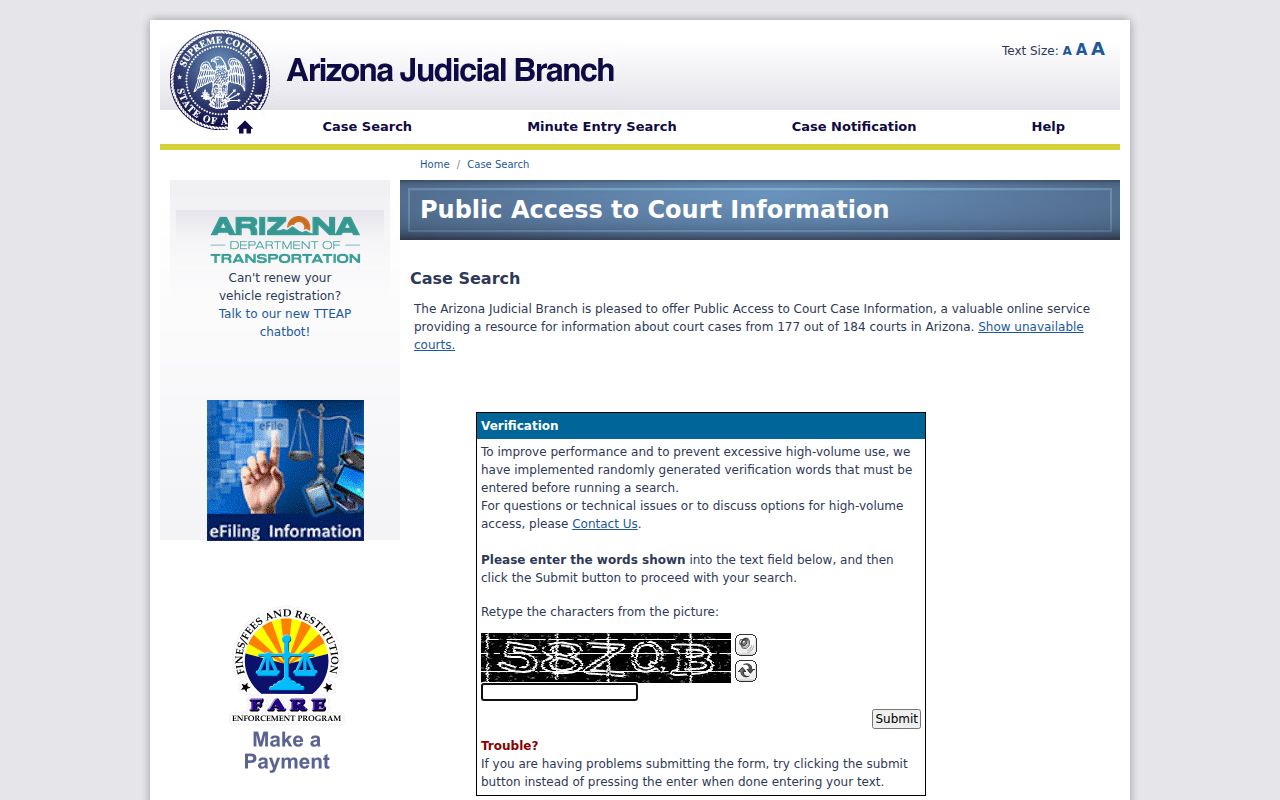
A result can show court, case number, title and type, filing date, party names and roles, attorney, public charge or claim text, judge, events, hearing details, status, and disposition. It is an index, not the official file. Sealed matters, protection orders, mental-health and probate cases, victim or witness data, juvenile matters, and local-ordinance charges are excluded.
| Name fields | Last or business name, first name, and middle name |
|---|---|
| Case control | Case number as an alternative to a name |
| Local filters | Court, county, and available case category |
| Result check | Party role, filing date, events, status, and court of record |
Confirm Peoria Court Lookup Results
Use Arizona eAccess for available Superior Court civil and criminal files dated from July 1, 2010. Free registration is required. Its Case & Party Search accepts full or partial case numbers or names and can filter by court. Advanced terms support AND, OR, and NOT. Document and electronic-certification charges can apply, so review the current screen before ordering.
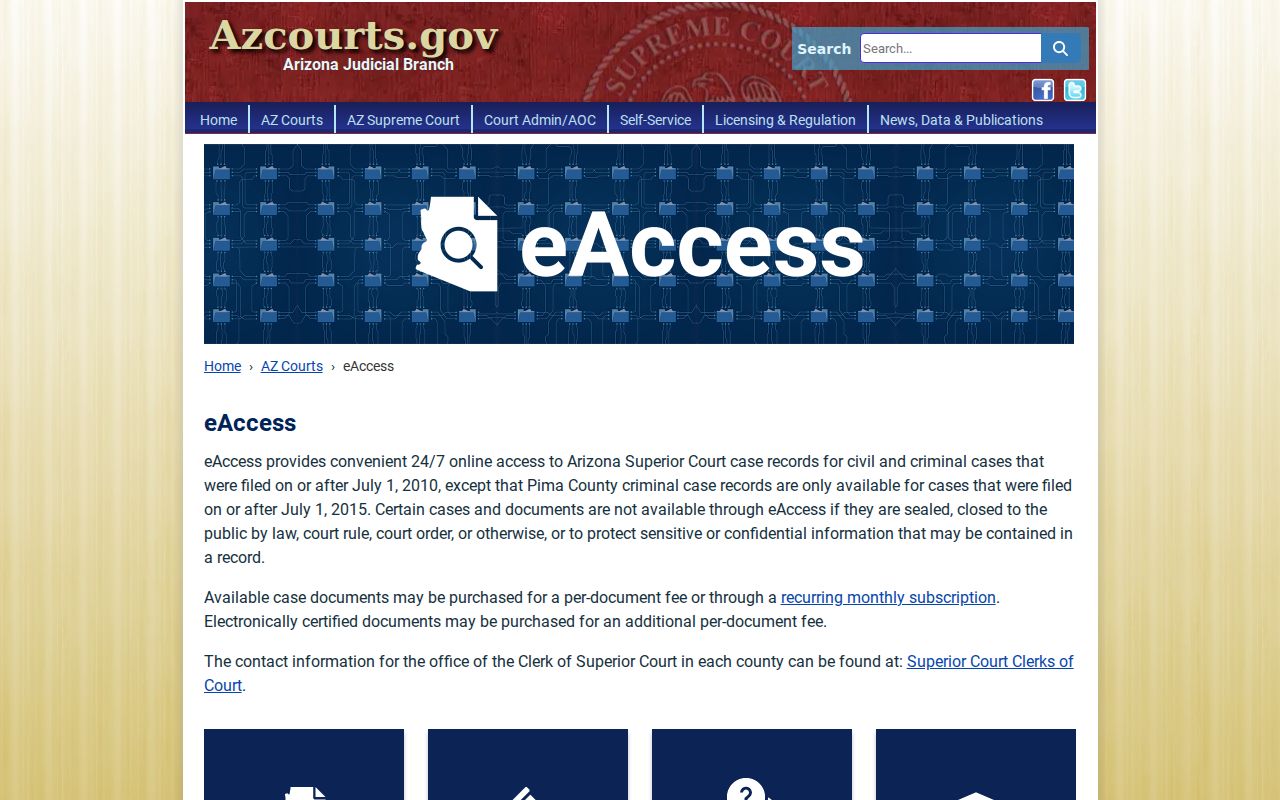
The Clerk of the Superior Court record service remains the source for the actual file and for marriage-license or probate records that are public. Peoria Municipal Court holds local misdemeanors, traffic matters, city-code cases, and protective-order business. Federal party searches go through PACER after account registration. Court geography follows the case, not merely the person's home.
Note: An empty web result does not prove that no case exists because court participation, case type, sealing, and load dates all affect display.
Verify a Peoria Resident Identity
The same-name trap is the main risk in a resident lookup. Keep a middle name or initial, suffix, approximate age, spouse or associate, address, APN, entity, and relevant date. Require two independent facts to agree before deciding that records describe one person. A shared surname alone is weak, and even a shared full name may be wrong.
- Anchor the name to a known Peoria address, deed, family event, or business filing.
- Search the official index with exact spelling, then test middle names, suffixes, and reasonable variants.
- Compare the result's date, party role, address, spouse, APN, or entity with the starting fact.
- Open or request the custodian's record when the index alone cannot settle identity.
- Record any conflict and avoid merging two people until another source resolves it.
- Docket
- The dated list of filings, hearings, orders, and events in a court case.
- Index versus image
- An index points to a record and summarizes fields; an image reproduces the filed document or certificate.
- Certified copy
- A copy authenticated by the official custodian for uses that require formal proof.
Write down the portal, query, search date, and result identifier. If two sources conflict, prefer the record closest to the event and ask its custodian about correction or copy access. Do not fill a gap with an assumption merely because the surrounding facts seem close.
Peoria Resident Voter Self-Lookup
The Arizona Voter Information Portal is a self-service check. It can show a voter's registration status, districts, notices, ballot-by-mail status, and elections in which the voter participated. Voting history never reveals ballot choices. Identifying inputs can include county, last name, birth date, and an address or identification component.
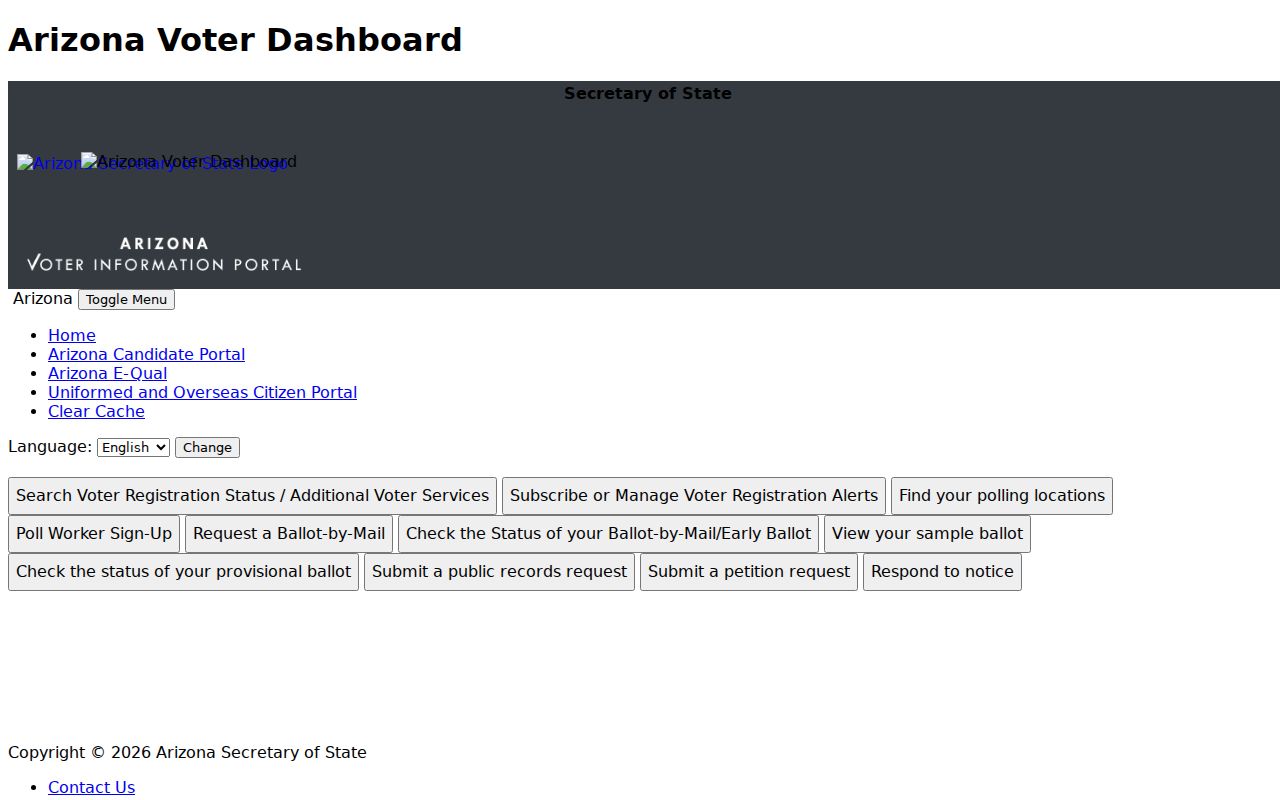
A broader voter file follows a different route through the Maricopa County Recorder. The official request form asks for applicant details, purpose, geography, status, and delivery choices. A.R.S. §16-168 limits use and reproduction. Protected voters are omitted under A.R.S. §16-153. The self-portal should never be scraped or treated as a public name-only directory.
Peoria Resident Vital Record Checks
The ADHS historical genealogy search opens noncertified images after 75 years for births and 50 years for deaths under A.R.S. §36-351(B). Search controls include record type, first, middle, and last names, sex, county, date ranges, and parent or spouse fields where indexed. Those family fields are useful when two Peoria residents share a name.
Current certificates are not open lookup records. The Arizona Bureau of Vital Records requires eligibility, identity, and relationship proof for recent birth or death copies. A local issue route is available through the Maricopa County Office of Vital Registration. Marriage licenses and divorce decrees come from the court system instead of ADHS.
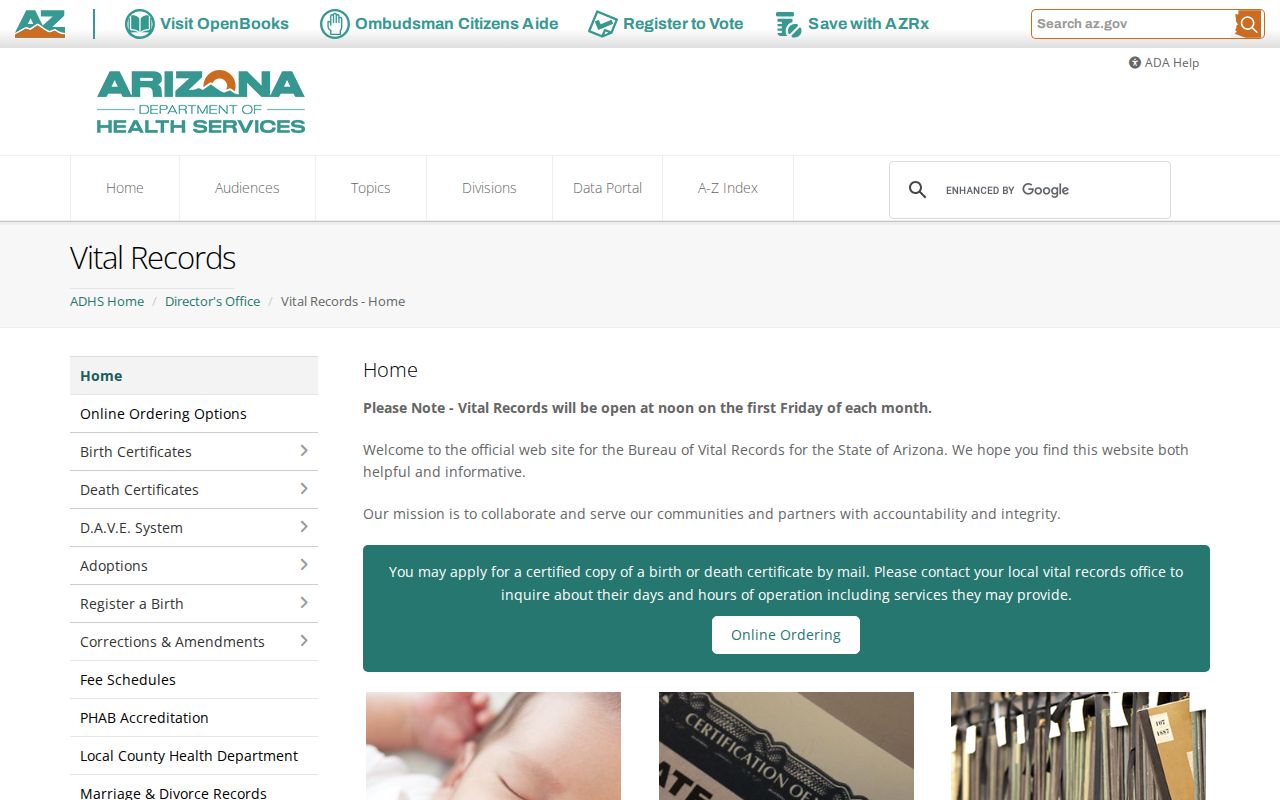
Applications can be submitted through official online, mail, and issuing-office channels. The current death-certificate application lists a $20 certified copy and requires a signed request, proof tied to the eligibility category, and valid identification or a notarized signature for mail. Never send identity documents to an address that was not published by the custodian.
Note: A free historical image is not certified, while a recent certified certificate requires the applicant to meet Arizona's eligibility rules.
Link Peoria Residents to Entities
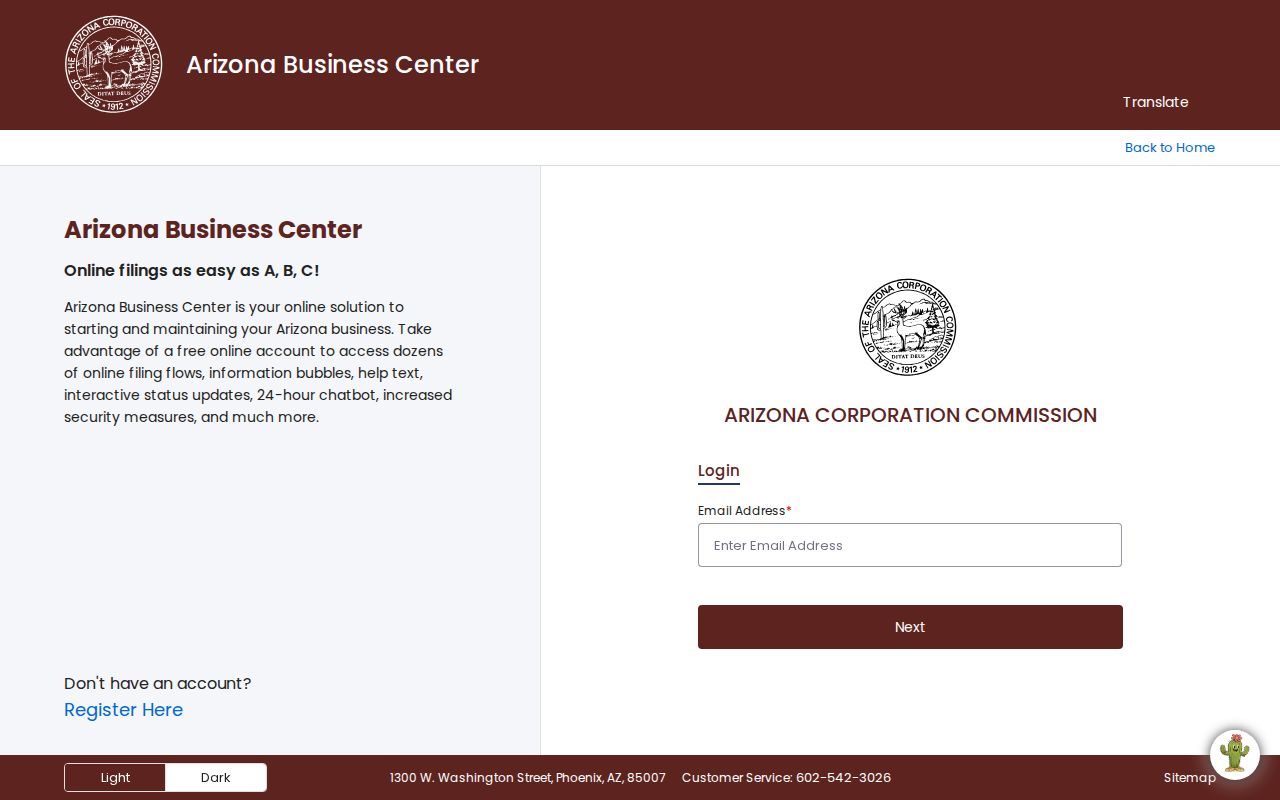
When the known clue is a company, use the Arizona Corporation Commission eCorp search. It accepts entity name, entity ID, agent name, or principal name. Results may show status, formation, statutory agent, principals, addresses, and filings. A statutory-agent or business address proves an official entity link, not a home address.
Trade names and trademarks are separate Arizona Secretary of State filings. Professional credentials are spread across the issuing boards, including contractors, medicine, nursing, real estate, law, and other regulated fields. Search both the personal and entity forms of a name. Peoria permit records can connect a contractor to work at an address, but a permit participant is not necessarily an occupant.
Peoria Resident Family Trails
Personal and family searches need sources suited to the relationship. An heir trail can begin with a probate file, then follow a will or inventory, a recorded affidavit or deed, and an obituary. A former classmate may appear in Arizona Memory yearbooks, local school archives, or alumni materials. The collection describes almost 600 yearbooks across 1903 through 1996, though exact Peoria coverage must be checked by title.
Arizona adoption records are confidential. A birth-parent search should use the official state court and ADHS adoption-record process or a confidential intermediary, not a public resident lookup. The Peoria city directory collections can help with older family addresses, spouses, and occupations, but each clue should be tested against census, vital, probate, or deed records.
Peoria Resident Lookup Boundaries
Arizona's Address Confidentiality Program gives qualifying survivors a substitute mailing address and forwarding service. Protected voter registration shields the actual residence under A.R.S. §16-153. Court Rule 123, juvenile and adoption law, vital-record statutes, and the federal Driver's Privacy Protection Act close other personal details. A lawful search must stop at those lines.
If a public record is wrong, correct it with the office that created it. Provide the APN, recording number, case number, voter request identifier, or license number and only the proof needed. Ask whether the record can be corrected, supplemented, sealed, redacted, or annotated. Historic instruments are often preserved rather than silently rewritten.
Lawful use. A Peoria resident lookup is for personal, lawful research. Arizona law does not permit stalking, harassment, threats, impersonation, or disclosure of a protected address.
Commercial people-finder results can merge same-name people, preserve obsolete addresses, or omit protected records. Treat the category only as a lead. An official index plus its custodian file is the sounder route, and two matching facts remain the safest identity test.