
Find Peoria Residents by Clue
A useful Peoria residents directory search starts with the most stable clue. An address points first to the county assessor, where the parcel number, legal description, tax owner, and mailing destination can be separated. A name fits the recorder, court, business, license, or unclaimed-property index. A year before modern web records calls for city directories, census schedules, newspapers, and archives. The county changes the route, too. Most Peoria parcels are in Maricopa County, while a thin northern part of the city reaches Yavapai County.
Official records rarely prove a complete household. Tax rolls list owners, voter data omits nonvoters and protected registrants, and permits name project participants. Directories can omit unlisted households. Treat each match as one piece of evidence, then seek a second independent fact such as a middle initial, spouse, parcel, case number, or consistent date. That two-fact rule prevents a common name from becoming a false identity claim.
- Confirm whether the parcel lies in Maricopa or Yavapai County.
- Search the assessor by owner, street address, subdivision, or APN.
- Use the recorder name index to locate deeds and related instruments.
- Check the correct court, archive, or lawful voter-access channel.
- Ask the custodian for a focused file or certified copy when needed.
Note: A Peoria postal label does not by itself establish city, county, or records jurisdiction for the address.
Peoria Resident Records Custodians
Peoria records are divided by government level and record type. The Maricopa County Assessor identifies parcels and tax owners. The Recorder preserves deeds, liens, plats, releases, and other recorded notices. The Clerk of the Superior Court keeps court, probate, and marriage-license files, while Peoria Municipal Court holds local misdemeanor, traffic, city-code, and protective-order matters. The city clerk is the fallback for council records, contracts, claims, and administrative files. Address work belongs in the Peoria street directory when the goal is a whole street rather than one record.
Maricopa County Recorder
Recorded land instruments and plats
Phoenix counter and online index
602-506-3535
Maricopa County Assessor
Parcel, owner, value, and sale records
Web search and public assistance
Maricopa County Elections
Registration and voter-history files
Self-service and written-request channels
The online index is a locator, not always the final record. A certified deed comes from the Recorder, an official case file comes from the court that heard it, and voter information follows separate Arizona access rules. Narrow requests by identifier, date range, department, person, and address. Arizona law requires prompt access but sets no universal fixed response-day deadline.
Map Peoria Records Before Names
The words “Peoria, Arizona” can describe a mailing identity, an incorporated city, or a place associated with a school district. Those shapes do not match. Most residents fall in Maricopa County, yet the municipal boundary reaches north into Yavapai County. The Peoria city-limit layer, county line, parcel geometry, and assessor situs field resolve the proper custodian. Situs means the physical location used for taxation. It is not the same as the mailing address used to send the tax notice.
This geography changes the search. A parcel north of the county line belongs in Yavapai County assessor and recorder systems even when the mailing label says Peoria. Old Town and 85345 have early plats, Sanborn coverage, and mid-century directories. Vistancia, WestWing, Blackstone, Trilogy, and other northern areas are better documented through newer plats, parcel records, permits, annexation layers, and HOA GIS. One method cannot serve every Peoria era.
Search Peoria Property Records
The Maricopa County Assessor is the fastest official route from a Peoria address to a parcel identity. Its result can show the APN, situs address, legal description, tax owner, mailing destination, value history, lot size, building details, sales, and links to maps or tax data. APN means assessor parcel number. It is a stable key that connects the tax card, map, treasurer account, permit, and deed trail.
Read the mailing field with care. A different mailing address can reflect an absent owner, trust, manager, or simple delivery choice. The same mailing and situs address still does not prove who occupies the home. Property evidence is strong for ownership and weak for a full household roster.
| Search field | How Peoria records use it |
|---|---|
| Parcel Number | Book-map-parcel format, with or without dashes in the viewer |
| Street Address | Number, direction, street, type, and optional ZIP |
| Owner Name | Use Last First without a comma in map help |
| Subdivision | Search by name or MCR plat number |
The manifest image below comes from the Arizona Department of Revenue unclaimed-property search, another name-and-locality clue used after the parcel path has been checked.
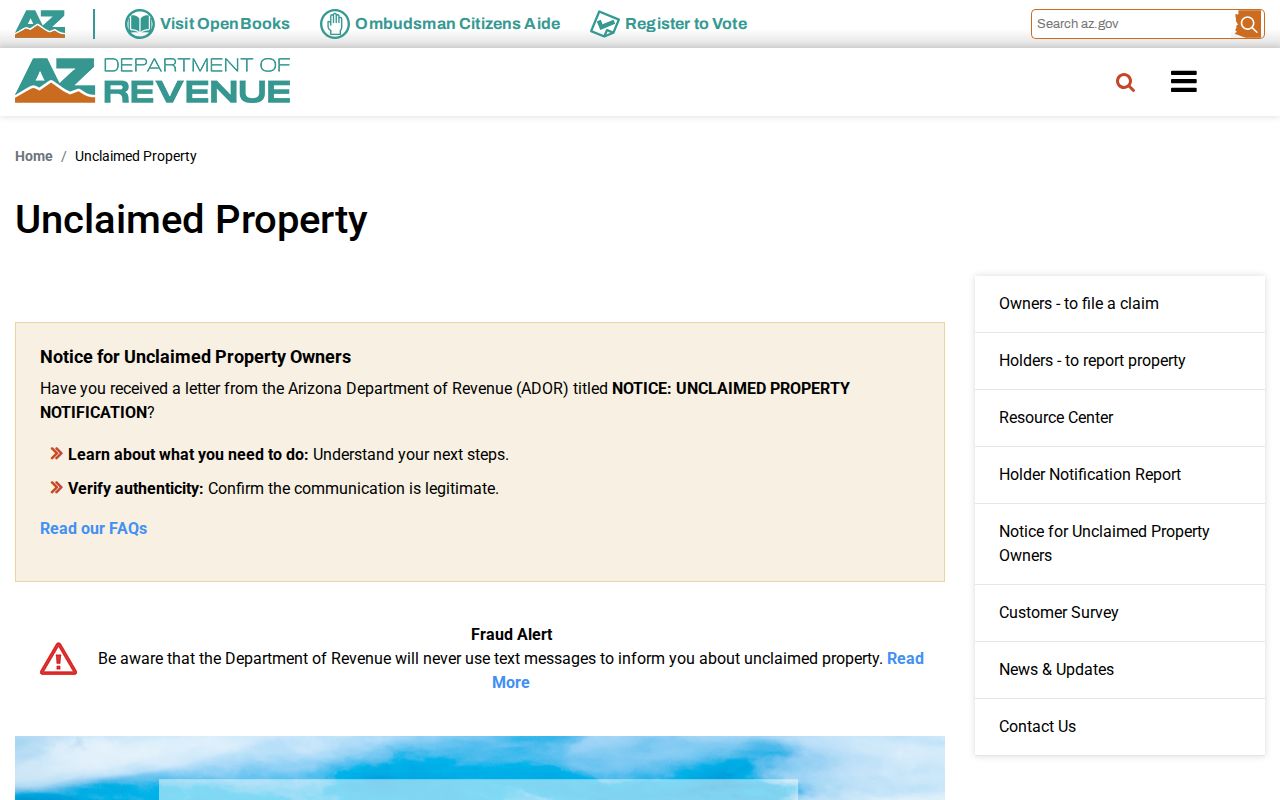
An unclaimed-property match can connect a person with a last-known city or ZIP, but identity proof is required before a claim and the entry does not establish a current address.
Follow Peoria Deed Records
The Maricopa Recorded Document Search reports more than 52 million searchable documents reaching back to county organization in 1871. Its index covers deeds, liens, plats, releases, easements, and notices. Search by party name, recording number, date range, document type, or indexed legal information. Results may provide the recording number and date, document code, page count, party roles, legal description, related instrument, and an image link.
A grantor transfers an interest; a grantee receives it. Begin with the current owner as grantee, open the acquisition deed, capture the seller as grantor, then search that seller as an earlier grantee. Keep the legal description fixed at every step. Trust names, LLCs, spelling variants, and partial parcel transfers can break a simple surname search. The index supplies notice and discovery. A certified copy from the Recorder is the record to rely on when authenticity matters.
- Index
- A finding list that points to a filed record.
- Parcel
- A mapped unit of land with its own assessor identifier.
- Plat
- A recorded map showing lots, blocks, streets, and easements.
- Criss-cross directory
- A historic volume organized from address or phone number to a listed name.
Note: A deed party is tied to an instrument, not automatically to present occupancy at the recorded address.
Check Peoria Voter Records Lawfully
The Arizona Voter Information Portal is a self-lookup service. It can show registration status, districts, notices, ballot-by-mail status, and election participation history after the user supplies identifying information. It is not a public name-only resident browser. Voting history states which elections a registrant joined, never how that person voted.
Maricopa County offers a separate written route for voter data under A.R.S. §16-168. A requested list may include name, registration date, addresses, party, status, and participation history, subject to the declaration, purpose, district, status, and delivery limits on the form. Protected voters are omitted under A.R.S. §16-153. Nonvoters and other household members never appear merely because one registrant does.
The voter-system screenshot comes from the Arizona Secretary of State’s 2025 funding announcement.
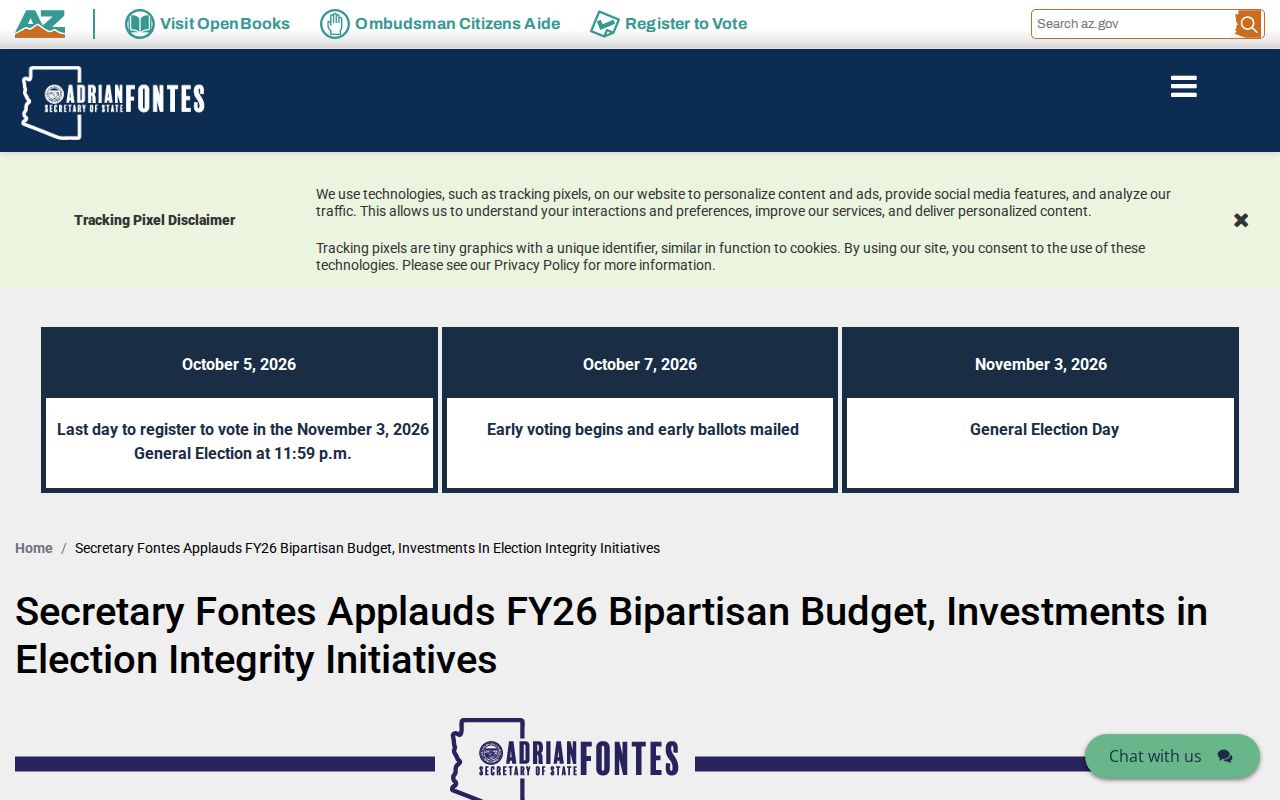
The announcement links voter-registration operations with continued Address Confidentiality Program funding, a useful reminder that access and address protection operate together.
Verify Peoria Court Records
A Peoria name may appear in municipal, justice, superior, appellate, or federal court. The case type and event decide the court. Arizona Public Access supports name and case-number searching after a CAPTCHA, with court, county, and category filters. It updates on a weekly cycle and excludes sealed, protection-order, mental-health, probate, and certain juvenile or victim data. Maricopa Superior Court contributes only criminal cases to that statewide index.
For other Superior Court divisions, use the Clerk and eAccess, whose covered civil and criminal documents generally begin July 1, 2010. A docket is the event list in a case. It can show parties, filing dates, status, judge, hearings, and dispositions, but the court file remains authoritative. Peoria Municipal Court handles city misdemeanors, traffic, and code matters rather than felonies or probate.
| Forum | Useful locator | Official file |
|---|---|---|
| Peoria Municipal Court | State index when included | Municipal Court request |
| Maricopa Superior Court | Clerk, eAccess, criminal state index | Clerk of Superior Court |
| Federal District Court | PACER | District clerk or PACER |
Compare Current Peoria Directories
Current Peoria directory sources represent roles, not a complete population. The assessor lists tax owners. The Recorder indexes parties to filed instruments. Voter systems cover registrants under controlled access. Court indexes list parties in public cases. License and entity databases connect people with professional or business records. Peoria GIS adds neighborhood names and management contacts without revealing an HOA member roster.
| Source | Who It Lists | Keeper | Access |
|---|---|---|---|
| Parcel and tax roll | Owners and mailing recipients | Maricopa Assessor | Free portal |
| Voter information | Registered voters | County Recorder and Arizona SOS | Self-lookup or lawful request |
| Recorded documents | Parties to deeds, liens, and notices | Maricopa Recorder | Free index |
| Case index | Parties in public court matters | Participating courts | Index, eAccess, or clerk |
| HOA GIS layer | Community and management contacts | Peoria GIS | Public map, no member list |
No row proves “everyone who lives here.” Choose the roll that matches the question, confirm the identifier, and check a second custodian. A Peoria resident lookup gives the tighter workflow for one named person.
Note: No current Peoria directory includes every resident, so match the source role to the question before drawing a conclusion.
Link Peoria Vital Records
Arizona’s public genealogy portal opens historic birth images after 75 years and death images after 50 years under A.R.S. §36-351(B). Search controls include record type, names, sex, county, year or date ranges, and parental or spousal fields where indexed. These images are free research copies, not certified certificates. Recent copies require eligibility, proof of relationship or legal interest, identity documents, and the proper application channel.
Marriage licenses, divorce decrees, and probate are court records, not substitutes supplied by the state vital-record office. The Maricopa Clerk is the relevant route for those files. For pre-registration gaps, combine church records, cemetery material, newspapers, census schedules, directories, deeds, and probate. Each source should support a precise identity link rather than a surname alone.
Note: Historic genealogy images and certified vital records serve different purposes and follow different access rules.
Date Peoria Addresses With Permits
Peoria Development Services Accela adds dated facts to an address trail. Its Building and Planning modules can be searched by record number, project name, street-number range, street components, parcel number, and date range. A result may identify an applicant, contractor, project address, work description, status, value, and milestone dates.
That evidence describes work, not a move. The permit applicant might be an owner, contractor, architect, or agent. Tie the permit parcel number to the assessor card and compare the project dates with deeds, directories, or other dated records. If the online depth is unclear, request a focused existing record from the city rather than inventing a start year.
Read Peoria Custody Records Carefully
Official custody and registry systems are narrow public-safety records. The Maricopa County Sheriff inmate channel covers current county custody, while the Arizona Department of Corrections, Rehabilitation and Reentry handles state prison data. A booking is not a conviction. Match a booking or inmate number, then use the relevant court docket to find the charge and disposition.
The Arizona inmate data search is shown in this manifest image.
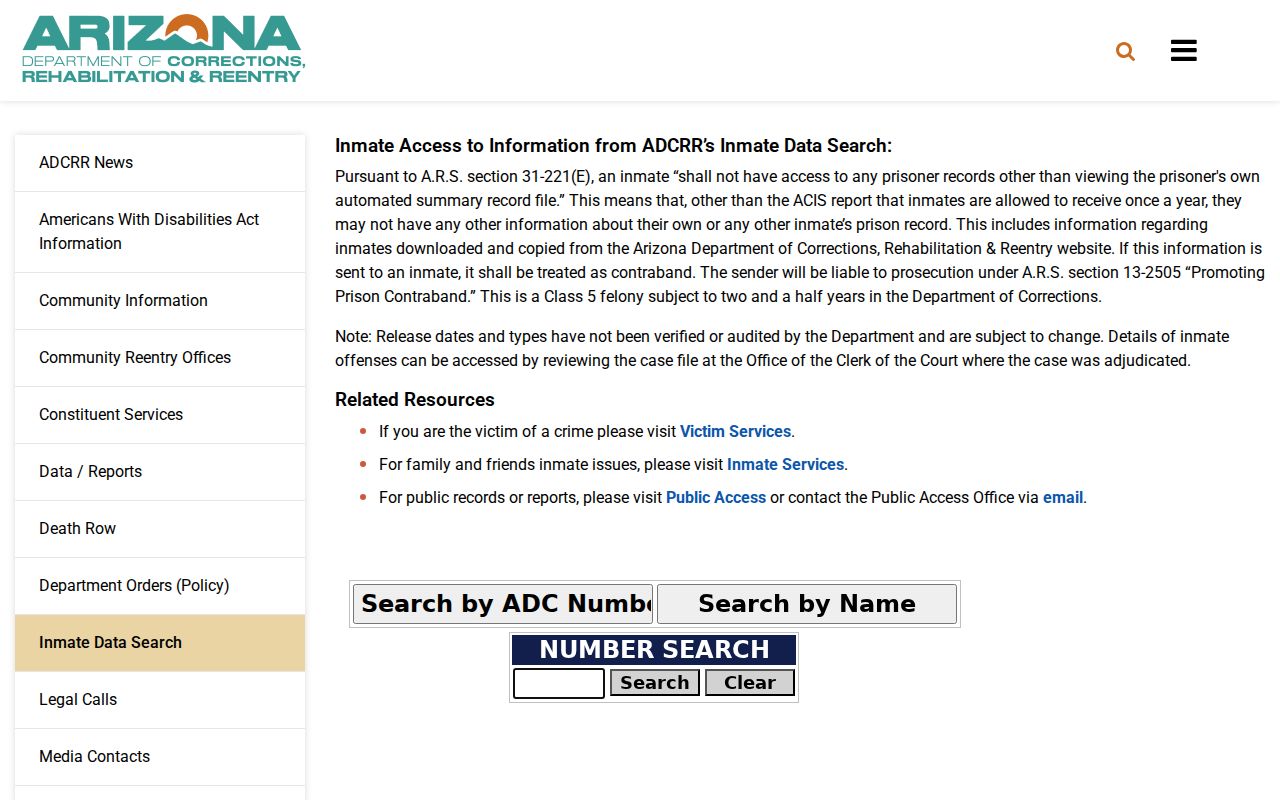
An inmate number is more stable than a facility name because transfers can change the displayed location without changing identity.
The Arizona DPS offender information service provides the source for the next image.
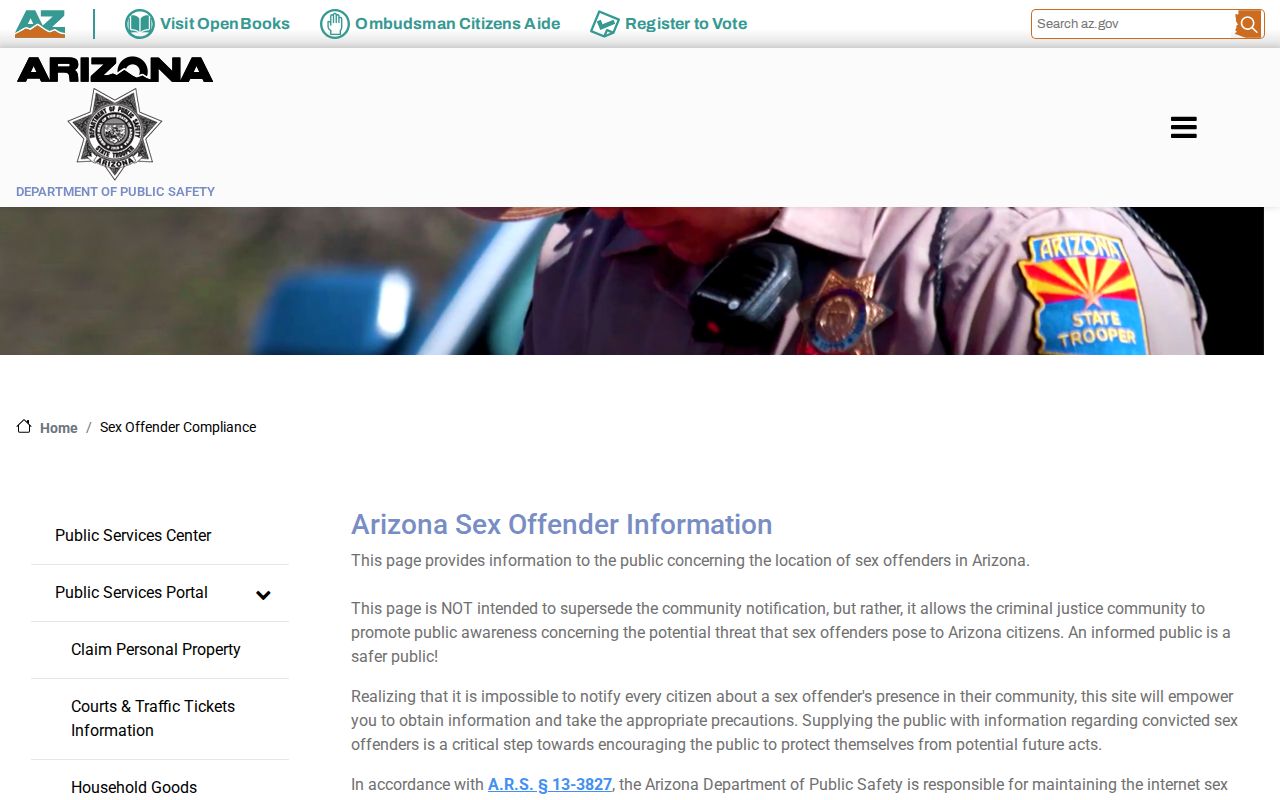
Registry coverage follows classification and registration law. Verify the official photo and record, and never use registry information to threaten or harass anyone.
Trace Peoria Residents Through Family
A past address can lead to a family-history trail without pretending that any one roll is complete. Start with the current parcel and acquisition deed. Follow prior grantors and grantees through the same legal description. At a death or fiduciary transfer, look for probate, an obituary, and a later heir deed. Historic city directories can place a listed household at an address between census years, while yearbooks and school archives may help reconnect classmates.
For adoption, public searching is not the proper route. Arizona adoption records are confidential, so use the state court or health-department process and any official confidential-intermediary channel. For heirs, preserve the case number, instrument number, relationship evidence, and exact names. This human-use chain respects sealed records while still making good use of open deeds, probate files, directories, and obituaries.
Note: Corroborate obituary relationships with probate, vital, census, or deed evidence before adding them to a family tree.
Protect Peoria Resident Addresses
The Arizona Address Confidentiality Program gives qualified survivors a substitute mailing address and mail forwarding. Protected voter registration under A.R.S. §16-153 also keeps real address data out of public voter extracts. Court rules, juvenile and adoption law, vital-record statutes, and the federal Driver’s Privacy Protection Act close other categories. An empty field or absent web result may therefore reflect lawful protection, not poor search technique.
When a public record is wrong, contact its custodian with the APN, recording number, case number, voter-request identifier, or license number and supporting proof. A.R.S. §39-121 supplies Arizona's core inspection rule, subject to confidentiality law. Ask whether the process permits correction, annotation, redaction, sealing, or only a later filing. Do not bypass access controls or republish protected details.
Browse Historic Peoria Resident Directories
The Arizona Memory Project supplies the clearest historic Peoria residents directory shelf. The 1949-50 Salisbury volume covers north and west Maricopa County and includes a numerical householders section. The 1954 Official Glendale-Peoria Directory names Peoria in its title. Mullin-Kille editions from 1957, 1959, and 1961 extend the run, while the 1962 Cole criss-cross volume organizes address or telephone clues back to names. Telephone books add subscribers but miss unlisted homes.
The State Research Library reports nearly 400 Arizona directories from 1881 through 1989. OCR is only a finding aid. Check the page image and abbreviation key, then record spouse, work, widow notation, residence, and tenure marks when present. The full collection trail belongs in the Peoria city directory treatment.
Match Peoria Records to Place
Peoria’s July 1, 2025 Census estimate was 200,881 people across 176.08 square miles. That scale spans compact Old Town, established south and central subdivisions, and broad northern master-planned and desert areas. The record trail changes with the landscape. Old Town research can draw on the three-sheet 1927-31 Sanborn catalog record and mid-century household directories. Newer northern communities rely more on recorded plats, assessor data, permits, annexation GIS, and the city HOA layer.
About three quarters of occupied homes were owner occupied in the 2020-24 Census profile, which helps explain why parcel records reveal much yet cannot describe every resident. Use city-limit and county overlays near Lake Pleasant and the Yavapai boundary. Use Spanish compound-surname and married or widowed variants when historic sources justify them, but never infer identity or ethnicity from a surname. A precise Peoria residents directory search stays tied to record era, geography, and the limits of each source.